
 By Hon. Comrade James Onifade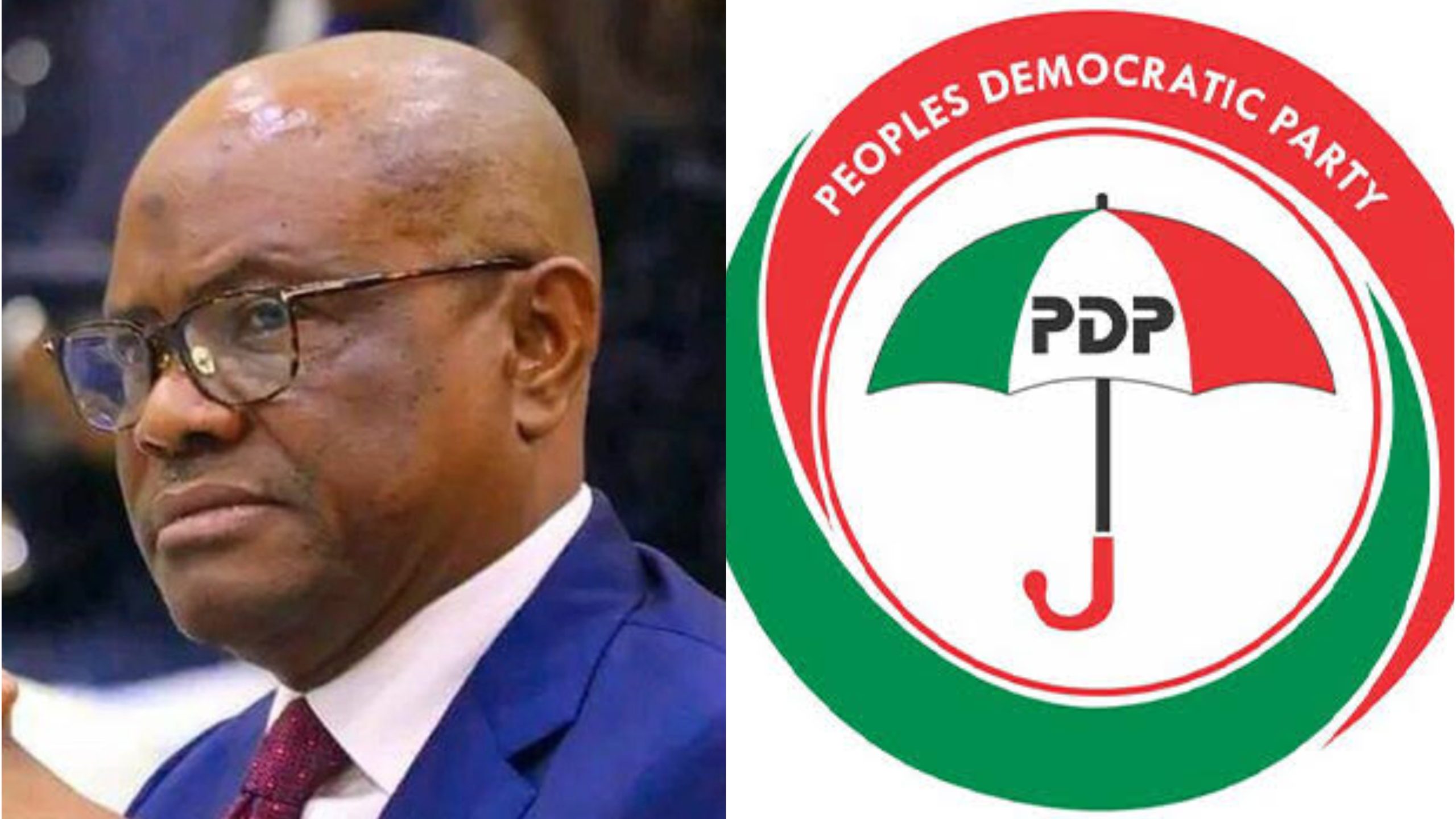
…Hon Comrade James Onifade replies Wike
Nigeria’s Minister of the Federal Capital Territory, Nyesom Wike, positioned himself over the weekend as the noble guardian of the Peoples Democratic Party, a party he claims to be protecting from “recent defectors” who threaten to “undermine or destroy” what founding members built.
Speaking at a factional NEC meeting at his official residence in Abuja, Wike painted himself as the defender of institutional integrity, warning against those who would disregard court judgments and conduct “illegal” conventions.
The irony is so thick you could cut it with a knife. Because this is the same Nyesom Wike whose political career has been a masterclass in party destabilization, strategic betrayal, and the very institutional disregard he now claims to oppose. For him to suddenly discover principles about party loyalty and constitutional order is not just unconvincing, it’s insulting to anyone with a functional memory.
A Brief Tour of Wike’s “Atrocities”
Let’s address the elephant in the room: Wike’s track record of undermining the PDP is not speculation or partisan mudslinging, it’s recent, documented history.
In the 2023 presidential election cycle, after losing the PDP presidential primary to Atiku Abubakar, Wike didn’t simply accept defeat and work for party unity. Instead, he became the party’s most effective saboteur.
He formed the notorious G-5 governors a rebel group that openly worked against their own party’s presidential candidate while remaining within the party structure to maintain their gubernatorial positions and access to party resources.
Wike and his cohorts made impossible demands, boycotted campaign activities, and effectively handed critical swing states to the opposition.
Some political analysts argue that Wike’s rebellion was singularly responsible for the PDP’s loss of states like Rivers, where his influence was paramount. The PDP’s defeat in that election cannot be discussed honestly without acknowledging Wike’s central role in undermining the party from within.
His reward for this betrayal? A ministerial appointment in the very government his actions helped install a government led by the opposition All Progressives Congress (APC). Wike now serves President Bola Tinubu while simultaneously claiming membership in and concern for the PDP. This is not political pragmatism; it’s shameless opportunism dressed in the language of principle.
The Damage Control Operation
Wike’s sudden concern about party integrity appears transparently connected to the factional crisis now tearing the PDP apart, a crisis he helped create. The Tanimu Turaki-led faction represents party members who are understandably frustrated with leaders like Wike who maintain PDP membership while actively serving in an opposition government.
By hosting a factional NEC meeting at his official government residence itself a questionable use of public resources and positioning himself as the party’s defender, Wike is engaging in classic damage control. He’s attempting to rewrite a narrative that has him cast as the villain by claiming the role of protagonist. It’s a bold strategy, but one that relies on collective amnesia.
His invocation of “founding members” is particularly rich. Yes, the PDP was founded by elder statesmen who envisioned a democratic alternative to military rule. But those founders created the party based on principles of internal democracy, loyalty, and collective purpose principles Wike has systematically violated whenever they conflicted with his personal ambitions.
The Factional Farce
Wike’s criticism of the Turaki faction for “disregarding valid court judgements” and conducting an “illegal national convention” would carry more weight if it weren’t so blatantly self-serving. Nigerian political parties have long histories of forum-shopping for favorable judgments and holding competing conventions when internal democracy fails them.
The PDP itself has survived multiple such crises.
What makes this situation different is that one faction is led by people openly serving in the government of the party’s opposition while claiming to represent the party’s true interests. It’s rather like a spouse moving in with their affair partner while demanding fidelity from the marriage and claiming to be protecting the sanctity of the home.
The question reasonable observers must ask is simple: What moral or political authority does Wike have to determine what’s best for the PDP while he serves as an APC minister? How can someone simultaneously collect a government salary from the opposition and claim to be safeguarding the party they supposedly belong to?
Wike’s maneuvering reveals something deeper about Nigerian politics: the hollowing out of political parties into vehicles for personal advancement rather than platforms for genuine ideological competition or democratic governance. Parties exist not as institutions with coherent values and principles but as temporary alliances of convenience, to be maintained when useful and abandoned when expedient.
In this context, Wike’s defense of the PDP is not about the party at all, it’s about maintaining his influence within its structures, ensuring that any eventual return to the PDP (should his APC benefactors no longer need him) is on his terms, and preventing the consolidation of power by party members who might hold him accountable for his previous actions.
The tragedy is not just Wike’s individual behavior but what it represents: a political culture where loyalty is performative, principles are negotiable, and institutional destruction is forgiven if the perpetrator is powerful enough.
When such figures face no consequences for their actions and can instead present themselves as defenders of the very institutions they undermined, the message to younger politicians is clear integrity is for suckers.
The Path Forward
For the PDP to have any hope of rehabilitation, it must confront some uncomfortable truths. The party cannot simultaneously accommodate those who actively worked for its defeat while claiming to be a serious political organization. It cannot allow members to serve in opposition governments while maintaining leadership positions and expect to be taken seriously by the Nigerian electorate.
The factional crisis Wike now claims to be resolving is, in many ways, his creation. Any solution that doesn’t address the fundamental contradiction of his position PDP member and APC minister is merely postponing the inevitable reckoning.
As for Wike’s warnings about recent defectors destroying the party, perhaps he should look in the mirror. The most dangerous threats to institutions often come not from outsiders but from insiders who know exactly where to place the knife. Wike has proven himself a master of that dark art.
His current performance as the PDP’s defender would be laughable if the stakes weren’t so high for Nigeria’s democratic future. Instead, it’s simply sad a transparent attempt at damage control from someone whose past atrocities against the party are too recent and too extensive to be forgotten, no matter how loudly he protests his loyalty now.
The Nigerian people, and PDP members in particular, deserve better than this political theater. They deserve leaders whose commitment to their party and principles extends beyond what’s convenient for their personal ambitions.
Until the PDP finds the courage to hold such figures accountable, Wike’s warnings about the party’s destruction will sound less like prophecy and more like confession.
Wike you have done enough in PDP, pack your stuff and go….
Enough is Enough!!!!
 Joshua Tosin Ogunsakin