
 By Joshua Tosin Ogunsakin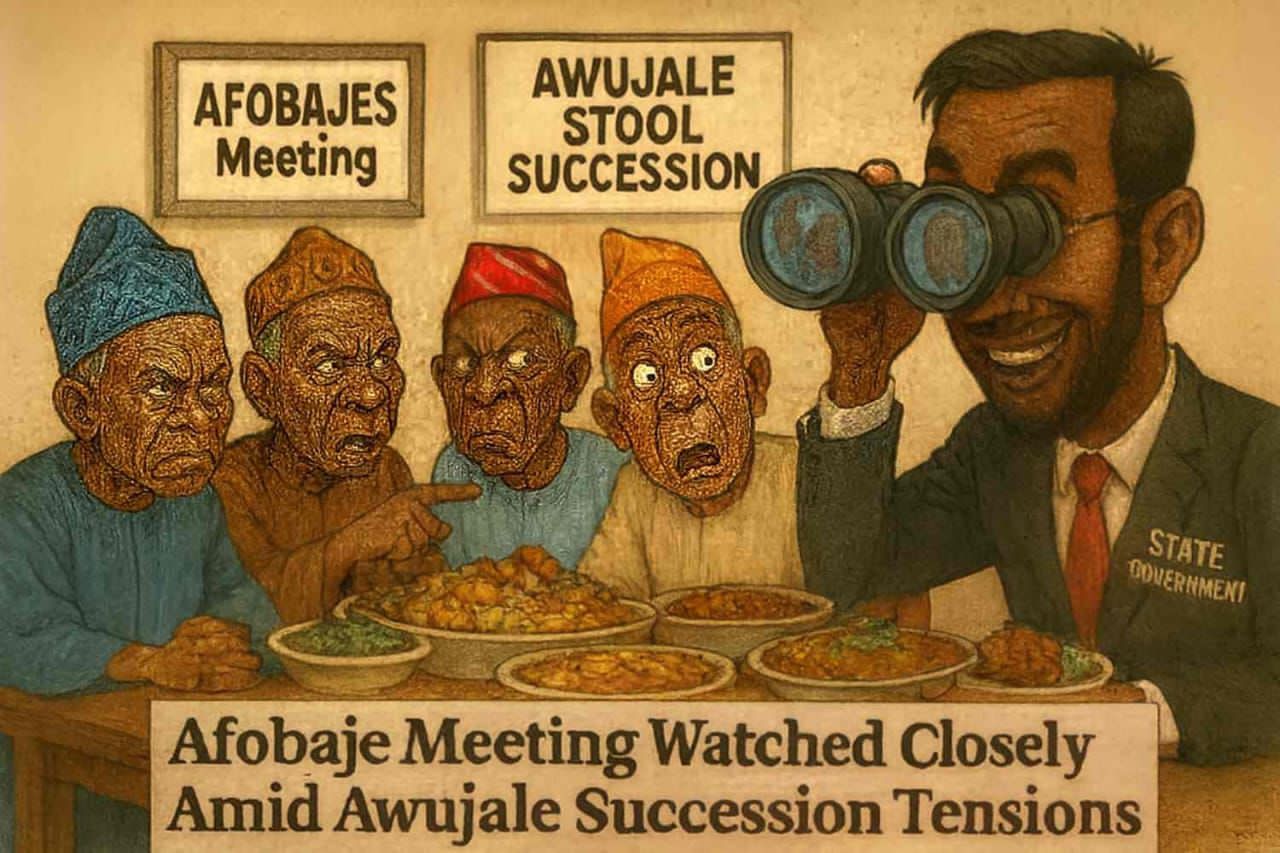
The ancient city of Ijebu-Ode finds itself at a historic crossroads. Following the passing of the legendary Oba Sikiru Kayode Adetona, who graced the throne for 65 remarkable years, the race to fill one of Yorubaland’s most prestigious stools has transformed from a traditional rite into a volatile standoff.
With the Ogun State Government recently ordering a second suspension of the selection process in January 2026, the atmosphere is thick with allegations of political imposition, legal petitions, and street protests. For Governor Dapo Abiodun, this is no longer just a local chieftaincy matter; it is a test of his administration’s commitment to the rule of law and the sanctity of Yoruba tradition.
Here is what the Governor must do next to navigate this crisis and ensure a peaceful transition:
1. Transparency Over “Security Reports”
The government’s primary reason for halting the process—security concerns and a “plethora of petitions”—has been met with skepticism.
While maintaining public order is the state’s duty, the lack of transparency regarding these “security reports” has fueled rumors of a “government project” to impose a specific candidate (rumored to be a certain Prince Kuye). What to do: The administration must clearly outline the specific procedural lapses that necessitated the halt. If there are 95 aspirants—including high-profile figures like KWAM 1 (Wasiu Ayinde)—the criteria for disqualification or suspension must be made public to dispel the “imposition” narrative.
2. Uphold the 1957 Chieftaincy Declaration
The Fusengbuwa Ruling House is currently in the spotlight, but internal disputes and claims from the Fidipote House about missed deadlines have created a legal minefield.
What to do: Governor Abiodun must strictly adhere to the 1957 Awujale Chieftaincy Declaration and the Ogun State Obas and Chiefs Law of 2021. Any attempt to bypass the traditional Kingmakers (the Afobajes) or the Osugbo society will not only lead to years of litigation but will also strip the future monarch of the cultural legitimacy required to lead the Ijebu people.
3. Immediate De-escalation and Dialogue
The sight of protesters in Ijebu-Ode carrying placards reading “Awujale stool is not for sale” is a sign of deep-seated distrust. The alleged presence of security forces at the palace only further alienates the traditional institutions.
What to do: Convene a Stakeholders’ Summit: Bring together the Olori Ebis (family heads) of the four ruling houses, the Council of Kingmakers, and respected Ijebu elders.
Public Reassurance: The Governor needs to go beyond press releases from his aides and personally reaffirm that the government’s role is that of a facilitator, not a kingmaker.
4. Address the “KWAM 1” Factor and Elite Tensions
The crisis has been complicated by the involvement of influential figures whose eligibility is being contested. This has turned a family matter into a media circus.
What to do: The Ministry of Local Government and Chieftaincy Affairs must act as an impartial arbiter. If an aspirant’s lineage is in doubt, it should be resolved through the traditional genealogical records of the ruling house, not through political influence or judicial technicalities that ignore custom.
The Stakes
The Awujale of Ijebuland is not just a traditional ruler; the stool is the “soul of the Ijebu nation.” A flawed selection process would be a stain on Governor Abiodun’s legacy and could lead to decades of communal division. “The Kingmakers must be allowed to make a King, or there will be no peace in the kingdom.” — A sentiment echoing through the streets of Ijebu-Ode.
Governor Abiodun has the opportunity to be the leader who protected the heritage of his people. To do so, he must step back from the “political” and lean heavily into the “traditional” and “legal.”
Written by Modupeoluwa Creatives
A Writer, Social Media Manager and Content Guru
 Hon. Comrade James Onifade