
 By Hon. Comrade James Onifade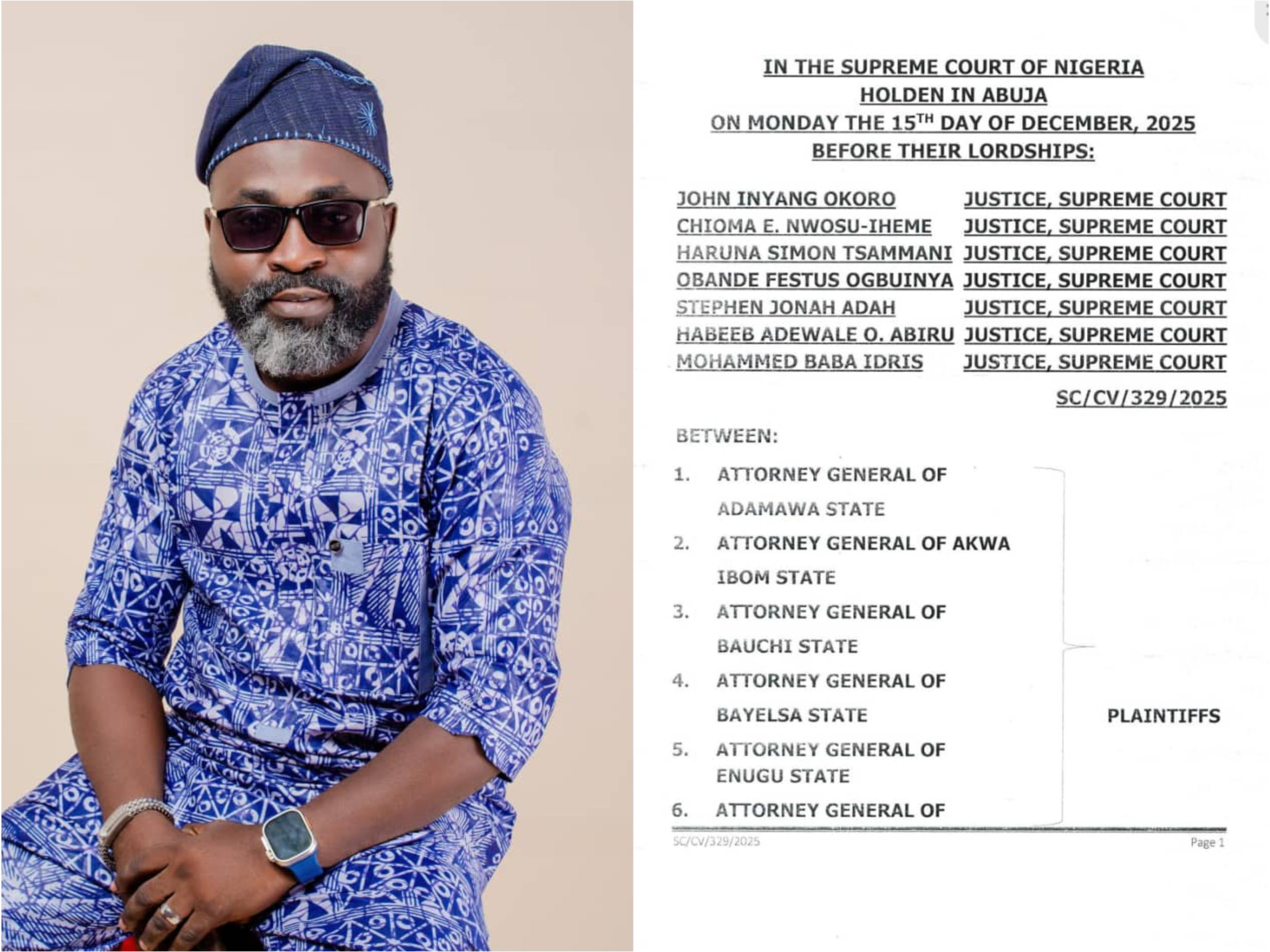
By: Hon Comrade James Onifade
……Supreme Court’s CTC Double Standard Exposes APC Plot to Suppress Democracy: A Call for Urgent Judicial Intervention……
Dear Distinguished Leaders and Fellow Compatriots,
I write with concern and deep alarm about a developing crisis that threatens the very foundation of our democratic governance and the integrity of our judicial system. This crisis demands immediate attention, transparent investigation, and decisive action to preserve the sanctity of justice in our nation.
The Crisis: A Tale of Two Judgments
In a development that has starkly exposed what appears to be calculated political manipulation of Nigeria’s judicial process, a Certified True Copy (CTC) of a Supreme Court judgment delivered on December 12, 2025 (last Friday) was released within four working days, while the CTC of the landmark December 5, 2025 ruling on Osun State Local Government ownership remains conspicuously unavailable after twelve days.
This stark disparity in processing times raises the most serious questions about whether the ruling All Progressives Congress (APC) government under President Bola Tinubu is deliberately withholding a judgment that would restore democratically elected Peoples Democratic Party (PDP) local government chairmen to office in Osun State.
This glaring discrepancy demolishes any claim that the delay in releasing the Osun judgment is due to administrative backlog, staff shortages, or the complexity of preparing written judgments. If the Supreme Court Registry can process and release a CTC within four days for one case, why has a judgment of far greater constitutional and public importance remained inaccessible for nearly two weeks?
The Constitutional Significance: Why This Judgment Matters
The December 5 Supreme Court ruling on Osun Local Government ownership is not merely another legal dispute. It strikes at the very heart of Nigeria’s democratic process, constitutional governance, and the autonomy of local government as enshrined in our constitution.
What Makes This Case Critically Important
This judgment addresses the fundamental question of who has the constitutional authority to govern at the grassroots level
the people’s elected representatives or politically appointed caretakers imposed by state governors. Sources close to the matter indicate that the judgment likely affirms the rights of democratically elected local government chairmen-predominantly PDP members who were removed from office through what many legal observers, constitutional experts, and democracy advocates have described as unconstitutional actions by the APC-controlled state and federal governments.
The ruling reportedly establishes critical precedents regarding:
1. The constitutional independence of local government councils from unwarranted state government interference
2. The supremacy of electoral mandates over executive convenience
3. The limitations on governors’ powers to arbitrarily dissolve elected councils
4. The financial autonomy of local governments as guaranteed by the constitution
5. The protection of grassroots democracy from partisan manipulation
The Political Calculation: Justice Held Hostage
Without the Certified True Copy, the affected parties—the democratically elected local government chairmen and the millions of Osun citizens they represent—cannot:
1. Take the judgment to appropriate court authorities for enforcement, thereby beginning the process of restoration to their rightful positions
2. Secure court orders for the immediate restoration of the democratically elected chairmen who have been unlawfully kept from office
3. Challenge any continuing violations of the Supreme Court’s directives by state or federal authorities
4. Implement the constitutional provisions and democratic principles established by the ruling
5. Access the financial resources and administrative machinery necessary to serve their constituents
6. Exercise the mandate freely given to them by the electorate in democratic elections
In essence, the withholding of the CTC effectively nullifies the Supreme Court’s judgment, rendering it a paper tiger that changes nothing on the ground while elected officials remain in exile and appointed caretakers continue to exercise powers they have no democratic or constitutional right to wield.
The Supreme Court’s Consistent Defense of Constitutional Process
What makes this obstruction even more troubling is that it contradicts the Supreme Court’s own recent jurisprudence on constitutional governance and the limitation of executive powers. The same Supreme Court that rendered the December 5 judgment on local government autonomy has previously delivered landmark rulings that constrain arbitrary executive action and protect democratic processes.
The Rivers State Precedent: A Standard Being Violated
It is instructive to recall that the Supreme Court has previously ruled on the critical question of presidential powers in declaring states of emergency. In addressing whether a state of emergency that occurred in Rivers State could be unilaterally pronounced by the President of the Federal Republic of Nigeria, the Supreme Court firmly established constitutional guardrails against executive overreach.
The Supreme Court affirmed that the President does NOT have the unilateral authority to declare a state of emergency in any state of the federation. Instead, such a declaration requires adherence to constitutional processes that include:
1. The mandatory involvement and approval of both chambers of the National Assembly (the Senate and the House of Representatives), ensuring legislative oversight of executive emergency powers
2. Constitutional consultation mechanisms that respect the federal character of our democracy
3. The consent and consultation of the sitting governor of the affected state, recognizing the autonomy and dignity of state governments within our federal system
4. Presentation of credible evidence and justification for the emergency declaration before the National Assembly
5. Time-bound limitations and periodic review of any emergency powers granted
This Rivers State judgment established a fundamental principle: No matter how powerful the President may be, he cannot act unilaterally to undermine the constitutional order or bypass the democratic institutions that check executive power.
The Glaring Contradiction
Here lies the profound irony and contradiction that exposes the political nature of the current CTC obstruction:
The same Supreme Court that constrained presidential power and defended federal democratic principles in the Rivers State case has now ruled to protect local government democracy in Osun State—yet this latter judgment is being suppressed through administrative manipulation.
If we accept the Supreme Court’s reasoning that the President cannot unilaterally declare an emergency in a state without following constitutional processes, how can we tolerate the executive branch effectively nullifying a Supreme Court judgment through the simple expedient of withholding its certified copy?
The Supreme Court told us that constitutional processes cannot be bypassed when it serves executive convenience. That principle applies equally—perhaps even more forcefully—when the executive seeks to obstruct the implementation of judgments that run counter to its political interests.
Pattern of Anti-Democratic Interference
This is not the first time the APC federal government and its state affiliates have been accused of systematically undermining local government autonomy and grassroots democracy. The pattern is becoming disturbingly clear, sophisticated, and increasingly brazen.
What makes the current Osun situation especially outrageous is the brazen and undeniable nature of the obstruction. By demonstrating through the December 12 case that they can release CTCs within four working days when it suits their political interests, those responsible for the delay have inadvertently provided smoking-gun evidence of their own malfeasance.
This is not speculation or conspiracy theory. The evidence of selective application of administrative procedures is documented, verifiable, and damning. The same registry, the same staff, the same Supreme Court yet radically different timelines depending on the political implications of the judgment.
The Judiciary Under Siege
This situation places Nigeria’s Supreme Court the final arbiter of constitutional disputes and the ultimate guardian of our democratic order in an impossible and deeply troubling position.
The court has delivered its judgment, presumably after careful consideration of constitutional provisions, legal precedents, and the fundamental principles of democratic governance. The justices have done their constitutional duty. They have interpreted the law, applied it to the facts, and rendered judgment upholding constitutional principles and the rights of democratically elected officials.
Yet, through administrative manipulation likely orchestrated by political actors with access to or influence over the court’s registry processes, that judgment is being held hostage.
Critical Questions Demanding Immediate Answers:
1. Who has the authority to delay the release of a Certified True Copy beyond normal processing times? What are the established protocols, and have they been violated?
2. What instructions, if any, have been given to the Supreme Court Registry regarding the Osun judgment? Are these instructions documented, and by whose authority were they issued?
3. Has any external pressure—political, financial, or otherwisebeen applied to court officials to delay the release? If so, by whom, and what form did this pressure take?
4. Why the selective efficiency? What explains the ability to process one CTC in four days while another remains unavailable after twelve days?
5. What communication has occurred between the Presidency, the Attorney-General’s office, or APC officials and the Supreme Court Registry regarding this matter?
6. Are there any pending “administrative reviews” or unusual procedures being applied exclusively to this judgment?
7. What is the normal processing time for CTCs, and how does this case compare to historical averages?
8. Who benefits from this delay, and who is harmed by it? The answer reveals the motivation.
A Direct Appeal to the Chief Justice of Nigeria
Your Lordship, the Chief Justice of Nigeria, I appeal to you with the utmost respect for your office and confidence in your commitment to judicial independence and the rule of law.
The reputation and integrity of the Supreme Court the institution you lead are at stake. If administrative processes within the court can be manipulated for political purposes, if judgments can be rendered ineffective through the simple expedient of withholding certified copies, then the entire judicial system is compromised.
We respectfully call upon you to:
1. Immediately investigate why there is such a stark disparity in CTC processing times between the December 5 and December 12 judgments
2. Personally intervene to ensure the immediate release of the Osun Local Government judgment CTC
3. Institute safeguards to prevent future manipulation of court administrative processes
4. Make public the standard operating procedures for CTC issuance to ensure transparency
5. Hold accountable any officials found to have deliberately delayed the release for political reasons
6. Issue a public statement reaffirming the Supreme Court’s commitment to timely access to justice
The National Judicial Council must also launch an urgent investigation into whether the Supreme Court’s administrative processes have been compromised by political interference. The independence of the judiciary is not merely about judges being free from influence when deciding cases it extends to ensuring that the implementation of those decisions cannot be frustrated through bureaucratic manipulation.
Osun State: A Flashpoint for Grassroots Democracy
Osun State has become a critical flashpoint in the larger battle over local government autonomy, electoral integrity, and the future of grassroots democracy in Nigeria. What happens in Osun will set precedents that reverberate throughout the federation.
E-signed: Hon Comrade James Onifade
An Advocate for Good Governance and A Better Judicial System
 Joshua Tosin Ogunsakin