
 By Joshua Tosin Ogunsakin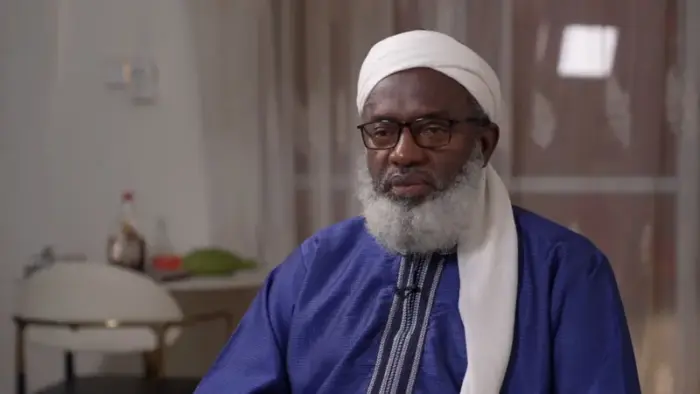
Islamic cleric Sheikh Ahmad Gumi has described the kidnapping of schoolchildren as a “lesser evil” compared to the killing of soldiers, insisting that Nigeria must negotiate with bandits to prevent further bloodshed.
Speaking in an interview with the BBC on Tuesday, Gumi acknowledged that while the abduction of minors is “evil,” it is less grievous than murder — particularly in cases where kidnapped children are eventually released unharmed.
“Saying that kidnapping children is a lesser evil than killing your soldiers, definitely is lesser. Killing is worse than, but they are all evil. It’s just a lesser evil. Not all evils are of the same power,” he said.
Citing previous incidents, including a mass abduction in Kebbi State, Gumi noted that the victims were freed without fatalities.
“So it’s a lesser evil than, like, what happened in Kebbi. They abducted children, and they were released. They didn’t kill them.”
The comments come as more than 315 people — including 303 students and 12 teachers — were abducted in Niger State. On 7 December, the Federal Government announced the release of 100 students, while 50 others had earlier escaped following the kidnapping.
“It’s an evil, and we pray that they escape,” Gumi said when asked about the children’s parents.
The cleric defended his longstanding stance that negotiating with bandits is unavoidable, describing engagement with non-state actors as a practical strategy to secure peace and save lives. He added, “Everybody negotiates with bandits. That word [‘we don’t negotiate’], I don’t know where they got it from. It’s not in the Bible. It’s not in the Quran. In fact, it’s not even in practice. Everybody’s negotiating with outlaws, non-state actors, everybody. So who got it, and where did they get that knowledge from? We negotiate for peace and our strategic interests. If negotiation will bring stoppage to bloodshed, we will do it.”
Gumi stressed that his past engagements with bandits were conducted openly with authorities and the press.
“I go there with the authorities. I don’t go there alone. And I go there with the press,” he said, adding that his last direct meetings with bandit groups were in 2021. He attempted to unite various factions but said the federal government at the time “was not keen” on the initiative. He withdrew once the groups were officially designated as terrorists.
Turning to the wider security situation, Gumi argued that Nigeria’s military cannot shoulder the burden alone.
“We need a robust army… but even the military is saying our role in this civil unrest, in this criminality, is 95% kinetic. The rest is the government, the politics, and the locals. The military cannot do everything,” he said.
He also clarified that most bandits are Fulani herdsmen rather than urban Fulani, describing their struggle as rooted in survival and cattle rearing.
“They are fighting an existential war… Their life revolves around cattle. In fact, they inherit them. They’ll tell you, ‘This cow I inherited from my grandfather.’ They’re mostly Fulani herdsmen, not the Fulani town, because you have to differentiate between the two,” Gumi said.