
 By Joshua Tosin Ogunsakin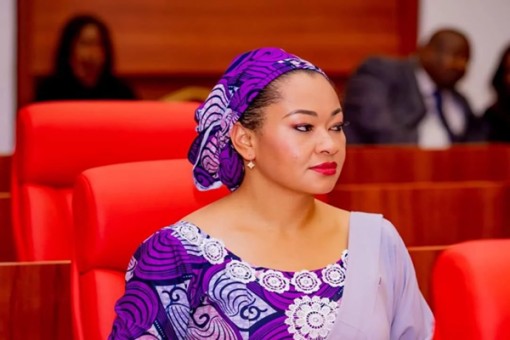
The Federal High Court sitting in Abuja has postponed the trial of Senator Natasha Akpoti-Uduaghan to February 4, 2026, in a case involving serious allegations under the Cybercrimes Act.
The matter, which was scheduled to resume on Monday before Justice Mohammed Umar, was stalled due to the judge’s absence. A new date—February 4, 2026—has now been fixed for the commencement of trial.
This marks another delay in the high-profile case, which has faced several setbacks. A previous court session scheduled for October 21 was similarly disrupted, following a protest led by rights activist Omoyele Sowore demanding the release of Nnamdi Kanu, recently convicted on terrorism-related charges.
Justice Umar had earlier fixed the October date after proceedings were stalled on September 22 when the defence raised a preliminary objection.
Senator Akpoti-Uduaghan, who was arraigned on June 30, 2025, faces a six-count charge brought by the Director of Public Prosecutions of the Federation, Mohammed Abubakar. She was granted bail after her arraignment, with the court initially scheduling trial to begin on September 22.
On that date, just as prosecuting counsel David Kaswe prepared to open the case with the first witness, defence counsel Ehiogie West-Idahosa raised an objection.
A television screen had been set up in the courtroom for the session, but West-Idahosa informed the court that a notice of preliminary objection had already been filed. He argued that the court lacked jurisdiction to entertain the case, not based on the content of the charges but due to alleged abuse of prosecutorial authority by the Attorney-General of the Federation.
He also noted that the defence had not been served copies of witness statements, a point contested by the prosecution. Kaswe insisted the case should proceed, but Justice Umar ruled that the objection must first be addressed before trial could continue.
The case, marked FHC/ABJ/CR/195/2025, involves allegations that Senator Akpoti-Uduaghan “transmitted false and injurious information via electronic means with the intent to malign, incite, endanger lives and breach public order.”
According to the charge, the senator is accused of claiming—during a speech on April 4 in Ihima, Kogi State—that “the Senate President, Senator Godswill Akpabio, instructed former Governor Yahaya Bello to have her killed in the state.”
She is also alleged to have repeated similar claims in a television interview, asserting that “the Senate President and the former governor plotted to kill her in Kogi.”
The case is being prosecuted under the Cybercrimes (Prohibition, Prevention, etc.) (Amendment) Act 2024, and it is expected to test legal boundaries around freedom of speech and digital expression in Nigeria’s political space.