
 By Hon. Comrade James Onifade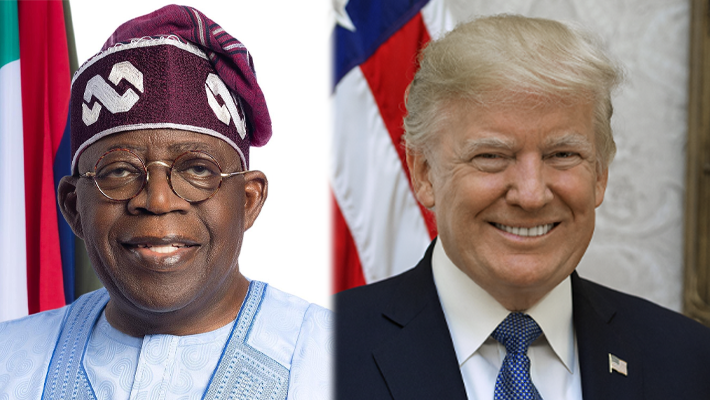
President Bola Tinubu’s administration has approved what may be one of Africa’s most expensive diplomatic moves, a $9 million lobbying contract with a Washington-based Republican firm. But as Nigeria grapples with this extraordinary expenditure, a critical question haunts the debate: Will Trump compromise, or is this simply $9 million spent to appease a force that cannot be placated?
The Deal: What’s Really Happening?
Nigeria’s National Security Adviser, Nuhu Ribadu, facilitated the engagement by hiring DCI Group, a Washington lobbying firm, through a Kaduna-based law firm called Aster Legal. The Tinubu administration paid the firm an initial $4.5 million on December 12, with a second tranche of $4.5 million due in July 2026, totaling $9 million—approximately $750,000 per month.
The stated purpose is straightforward: convince the Trump administration that Nigeria is seriously addressing insecurity, particularly in the northern regions where killings of Christians have prompted Trump to redesignate Nigeria as a “country of particular concern” and to threaten military strikes.
The Backdrop: Trump’s Escalating Pressure
The context matters here. Trump announced on December 25 that U.S. forces had carried out an airstrike in Sokoto State targeting suspected insurgent hideouts, and warned that additional strikes could follow if violence against Christian communities continued. This isn’t mere rhetoric, it’s action. Four days after the lobbying deal was concluded, the United States imposed a partial travel ban on Nigerians affecting tourist, business and student visa applicants, citing high visa overstay rates and inadequate Nigerian security vetting systems.
For Nigeria, the stakes feel existential. A U.S. military incursion or sustained diplomatic isolation could destabilize an already fragile government and economy.
Will Trump Compromise? The Hard Truth
Here’s the uncomfortable reality: probably not as much as Nigeria hopes.
Trump’s actions suggest he’s driven by conviction rather than persuasion. He has already taken concrete steps, military strikes, travel bans, redesignating Nigeria before the $9 million contract even kicked in. Chidi Blyden, a former Pentagon official involved in the engagement, argued that “having open lines of communication across multiple sectors between the two governments is key” given ongoing security operations. But “open lines of communication” are not the same as backing down from threats.
The fundamental problem is that Trump’s grievances appear tied to a genuine geopolitical calculation about Christian persecution and regional instability issues that cannot be solved by a public relations firm. Lobbying can shape perception, but it cannot change reality on the ground. If northern Nigeria continues experiencing insecurity and killings, no amount of messaging will convince Trump that his concerns were unfounded.
The Criticism: Is This Money Well Spent?
Opposition parties are scathing. The PDP National Publicity Secretary warned that no amount of lobbying could obscure the fact that improving citizens’ welfare remained the only sustainable way to enhance Nigeria’s global image, and the NNPP criticized the contract as wasteful, arguing that properly staffed embassies would be more effective than lobbyists.
The African Democratic Congress described the expenditure as “obscene” evidence of “misplaced priorities and moral blindness,” especially when millions of Nigerians are grappling with rising food prices, fuel costs, and limited access to basic healthcare.
This critique strikes at something deeper: Is Nigeria outsourcing its diplomatic credibility? Real security improvements, transparent governance, and demonstrated commitment to protecting all citizens would carry far more weight than even the most sophisticated lobbying campaign.
Critics argue that lobbying represents an “admission of diplomatic failure” and that relying on paid PR rather than strengthening Nigeria’s own diplomatic corps weakens institutional credibility.
The Strategy: A Ray of Hope?
Yet there’s a counterargument. Having a Republican lobbyist with Trump’s ear, DCI Group’s managing partner Justin Peterson is a prominent Republican strategist and close ally of President Trump does provide a direct channel at a critical moment. If Nigeria’s security situation improves, Peterson can amplify that message to Trump in ways the Nigerian government cannot.
The contract may buy time and ensure Nigeria’s voice is heard in Washington circles where perceptions of Nigeria are being formed and where decisions about further military action are being considered.
The Verdict: Appeasement, Not Capitulation
Will Trump compromise? Partially, perhaps. The lobbying may prevent escalation and maintain channels of communication. It may soften rhetoric if Nigeria demonstrates genuine progress on security. But Trump is unlikely to completely reverse course based on paid advocacy alone.
The real test will be what happens on the ground in northern Nigeria over the next six months. If insecurity continues unabated, $9 million in lobbying will be revealed as money spent in vain a band-aid applied to a wound that demands surgery.
Nigeria has gambled that professional diplomacy can buy time while its government addresses the underlying crises. Whether that bet pays off depends far less on Justin Peterson’s access to Trump than on whether Nigerian security forces can deliver tangible results.
E-signed: Hon Comrade James Onifade
Advocate for Good Governance and A Better Judicial System
 Joshua Tosin Ogunsakin