
 By Hon. Comrade James Onifade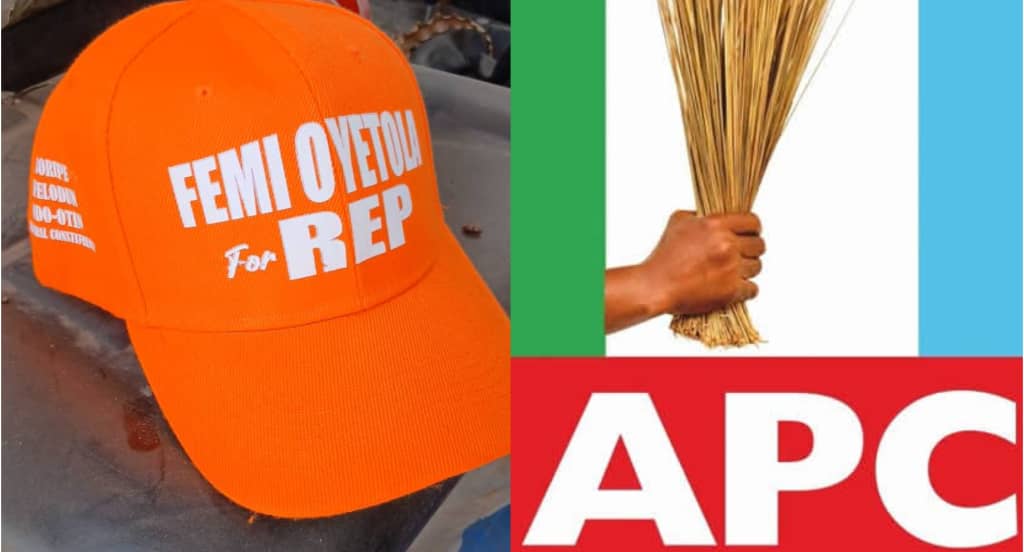
A political dynasty is unfolding right before our eyes. Something deeply disturbing is happening in Nigerian politics, and citizens across the nation are taking notice. What was once public service meant to be a calling open to all qualified citizens increasingly resembles a family enterprise, with political offices passed between relatives like inherited property.
The latest example couldn’t be more glaring: a bright orange campaign cap emblazoned with “FEMI OYETOLA FOR REP” tells only part of a much larger story about how power consolidates within a single extended family.
The Family Tree of Power
Let’s map out what’s unfolding:
At the top: President Bola Ahmed Tinubu occupies the highest office in the land, leading Africa’s most populous nation from Aso Rock.
In Osun State: Gboyega Oyetola, widely reported to be Tinubu’s cousin, served as Governor of Osun State from 2018 to 2022. His administration left behind a legacy that Osun citizens have not forgotten and not in a positive way. Now, his son, Femi Oyetola, is campaigning for a seat in the House of Representatives to represent an Osun constituency.
In Lagos State: Seyi Tinubu, the President’s son, is reportedly positioning himself for the governorship of Lagos State, Nigeria’s economic powerhouse and most influential state.
This isn’t just about individual ambitions. This is about an entire political structure being controlled by one extended family, spanning the presidency, state governorships, and legislative seats.
From Public Service to Private Enterprise
The question I want to ask is simple but profound: When did politics stop being about serving the people and start being about serving the family?
In a true democracy, political office should be accessible based on merit, vision, and the will of the people. Citizens should have the opportunity to choose from a diverse field of candidates who bring different experiences, perspectives, and solutions to the table.
But what we’re witnessing looks less like democracy and more like a political monarchy in the making. When the same family controls the presidency, influences multiple governorships, and plants members in legislative seats, it raises serious questions about whether ordinary Nigerians still have a meaningful voice in their own governance.
Let’s be direct: when politics becomes a family affair to this extent, it stops being public service and becomes a business. And like any business, the goal becomes protecting market share, maximizing returns, and keeping competition out.
If you’re not born into or connected to the right family, your path to meaningful political participation becomes exponentially harder, regardless of your qualifications or your commitment to serving your community.
Consider the accountability crisis: When family members control multiple branches and levels of government, who holds whom accountable?
Can we expect a Representative Oyetola to meaningfully scrutinize policies from President Tinubu?
Would Governor Seyi Tinubu govern Lagos independently or as an extension of his father’s interests?
Consider whose interests get prioritized: When one family controls so much power, whose needs come first? The average Nigerian struggling with inflation and insecurity, or the family network that needs to protect its political investments and perpetuate its hold on power?
This isn’t happening by coincidence. Political dynasties don’t emerge accidentally they’re built deliberately through patronage networks, strategic positioning, and the systematic use of incumbency advantages to benefit family members.
The Oyetola campaign cap isn’t just campaign merchandise. It’s a symbol of how brazen this consolidation of power has become. There’s no pretense anymore, no attempt to maintain even the appearance that these are independent political actors rising on their own merits. The family connection is right there, out in the open, as if to say: “This is how things work now. What are you going to do about it?”
Osun State: Where the Legacy Speaks Louder Than the Name
But here’s where the story becomes even more troubling, particularly for the people of Osun State. Femi Oyetola isn’t just riding on his family name, he’s asking Osun citizens to endorse a continuation of his father’s political legacy. And that legacy is one that most Osun residents would rather forget than relive.
Let’s be frank about Gboyega Oyetola’s tenure as Governor of Osun State from 2018 to 2022. These weren’t years of progress and development that citizens look back on with pride. These were years marked by:
– Workers’ suffering: Civil servants and pensioners endured prolonged periods without salaries and pensions. Families couldn’t pay school fees. Medical bills went unpaid. The dignity of public service was reduced to monthly anxiety about whether wages would arrive.
– Infrastructure decay: Roads that were already in poor condition deteriorated further. Public schools continued to crumble. Healthcare facilities remained under-equipped and understaffed.
– Economic stagnation: While other states were attracting investment and creating opportunities, Osun remained trapped in economic inertia.
– Youth unemployment continued its upward climb. Small businesses struggled without government support or enabling policies.
– Lack of vision: Beyond the rhetoric, there was no clear roadmap for transforming Osun into a competitive, prosperous state. The administration seemed content with maintaining the status quo and managing decline rather than pursuing bold, innovative solutions to the state’s challenges.
This is the record that Gboyega Oyetola left behind. This is what Osun citizens experienced firsthand. And now, his son wants to represent them in the House of Representatives?
The brazenness of this move cannot be overstated. It takes a particular kind of audacity to leave behind a legacy of unfulfilled promises and citizen suffering, and then field a family member for political office as if the people have short memories or no other options.
Imagine, regardless of whether you delivered on your promises or left your constituents worse off than you found them, political office remains available to your family members? That power is a family inheritance that transcends accountability?
This is democratic recklessness of the highest order. Democracy is built on the principle that leaders are chosen by the people and serve at the pleasure of the people. When leaders fail to deliver, the system provides a mechanism for accountability: they lose elections, and others get the opportunity to do better. But when political families short-circuit this accountability by simply rotating positions among relatives, the entire democratic feedback mechanism breaks down.
Osun Citizens Deserve Better
The people of Osun State deserve representation from someone who will genuinely fight for their interests, someone whose political future depends on delivering results rather than maintaining family networks. They deserve a representative who comes to the table with fresh ideas, untainted by the failures of the past, and genuinely committed to transforming the state’s fortunes.
Osun is blessed with talented, capable, visionary individuals across all political parties and none. There are educators who understand what it takes to fix the education system. There are entrepreneurs who know how to create enabling environments for business growth.
There are healthcare professionals who can articulate what’s needed to improve medical services. There are youth leaders who understand the aspirations and frustrations of their generation.
Why should all of this talent, all of this potential leadership, be pushed aside for someone whose primary qualification is his surname and family connection?
A Democracy or a Family Empire?
At this point, is Nigeria running a democratic country or building a family empire? Nigeria fought for independence. Nigerians fought for democracy. Citizens endured military rule and stood firm in demanding civilian governance. All of this was done with the belief that in a democracy, leadership would be determined by the will of the people, not by accident of birth or family connection.
When political office circulates within one family from president to governor to representative to the next generation’s gubernatorial ambitions we must ask ourselves: Is this still a democracy, or have we simply traded one form of dynastic rule for another?
Are we building a nation where merit, competence, and vision determine who leads, or are we creating a political aristocracy where power is the exclusive preserve of connected families?
Breaking the Cycle: What Must Be Done
We cannot just fold arms and be looking, the solution isn’t complicated, though implementing it requires courage:
– Nigerian voters must prioritize competence over connections and vision over family name. When you enter that voting booth, ask yourself: “Is this candidate the best person for this position, or are they just the best-connected?”
– Political parties must open their primaries to genuine competition instead of anointing candidates based on their surnames or family ties.
– Party leadership should have the integrity to tell powerful families: “Your relative’s performance was inadequate. We need to field someone who can actually win and deliver.”
– Citizens must demand accountability and use their votes to disrupt these dynastic patterns. If a politician failed to deliver during their tenure, their relatives should not benefit from the infrastructure of power and patronage that tenure created.
– The media and civil society must continue to shine a light on these patterns, calling them out by name and refusing to normalize what should be scandalous.
Most importantly, Nigerians must reclaim the fundamental principle that political office is a public trust, not a family heirloom. It belongs to the people, and the people alone should determine who holds it.
A Special Message to Osun State
To the good people of Osun State specifically: You lived through the Oyetola administration. You know what was promised and what was delivered. You know which roads remained impassable.
You know which salaries went unpaid. You know which promises dissolved into empty rhetoric.
You have the power to say: “Enough.”
You have the power to make it clear that poor performance has consequences, and one of those consequences is that political power doesn’t automatically transfer to the next generation of the same family.
You have brilliant sons and daughters who are ready to serve, people with proven track records in their respective fields, people whose political futures depend entirely on delivering results for you.
Why settle for a family name attached to a disappointing legacy when you can choose someone who brings fresh energy, new ideas, and genuine accountability?
This is not about partisan politics. This is about democratic principles. Regardless of whether you support APC, PDP, Labour, or any other party, the principle remains the same: political office should be earned through merit and maintained through performance, not inherited through family connections.
If Nigerians accept this pattern in Osun and Lagos, it will replicate across all 36 states. Soon, every state will have its political families, every local government will have its dynastic clans, and the idea that ordinary citizens can participate meaningfully in governance will become nothing more than a beautiful lie we tell ourselves.
The bad legacy of the Oyetola administration in Osun must not become a template for how political families operate across Nigeria. We cannot allow a system to take root where failure in office doesn’t end a political career it just transfers it to a family member who continues the same policies, protects the same interests, and delivers the same disappointing results.
The orange cap with “FEMI OYETOLA FOR REP” will fade and weather with time. But the question it represents whether Nigeria’s democracy will be for all Nigerians or just for a privileged few families that question demands an answer now.
Every election is a choice between the Nigeria we have and the Nigeria we want. Do we want a country where capable citizens from all backgrounds can aspire to leadership and achieve it based on their merit? Or do we want a country where political power is the exclusive inheritance of connected families, passed down from generation to generation like a family business?
The people of Osun State have an opportunity to send a powerful message not just to the Oyetola family, but to every political dynasty in Nigeria: Poor performance has consequences. Democracy is not a family affair. Public office is earned, not inherited.
That message, if sent clearly through the ballot box, would resonate across Nigeria.
It would remind every politician that their performance matters, that their legacy affects not just their own political future but that of their entire family network. It would begin the difficult but necessary work of restoring accountability to Nigerian democracy.
Will we tolerate this democratic recklessness, or will we stand firm on the principle that in a true democracy, every citizen regardless of their family name has an equal opportunity to serve, and every leader regardless of their connections must be held accountable for their performance?
To Osun APC members specifically: Open your eyes and reject the imposition of leaders’ family members or relations on elective positions. Are there no other qualified APC members with the competence, vision, and dedication to be aspirants or candidates?
Why do you consistently fold your arms and watch your leaders impose their choices on you?
What is the essence of your years of labor, sacrifice, and loyalty to the party if it only serves to elevate one family’s interests?
It’s time to kick against this undemocratic act now, before your political relevance fades completely. Demand that your party primaries be open, competitive, and based on merit. not family connections. Your voice matters. Use it, or lose it forever.
The answer will shape not just the next election, but the future of Nigerian democracy itself.
 Joshua Tosin Ogunsakin